FEWER ANTS. A MORE COMFORTABLE LAWN.

Outdoor Ant Control Services for Your Lawn

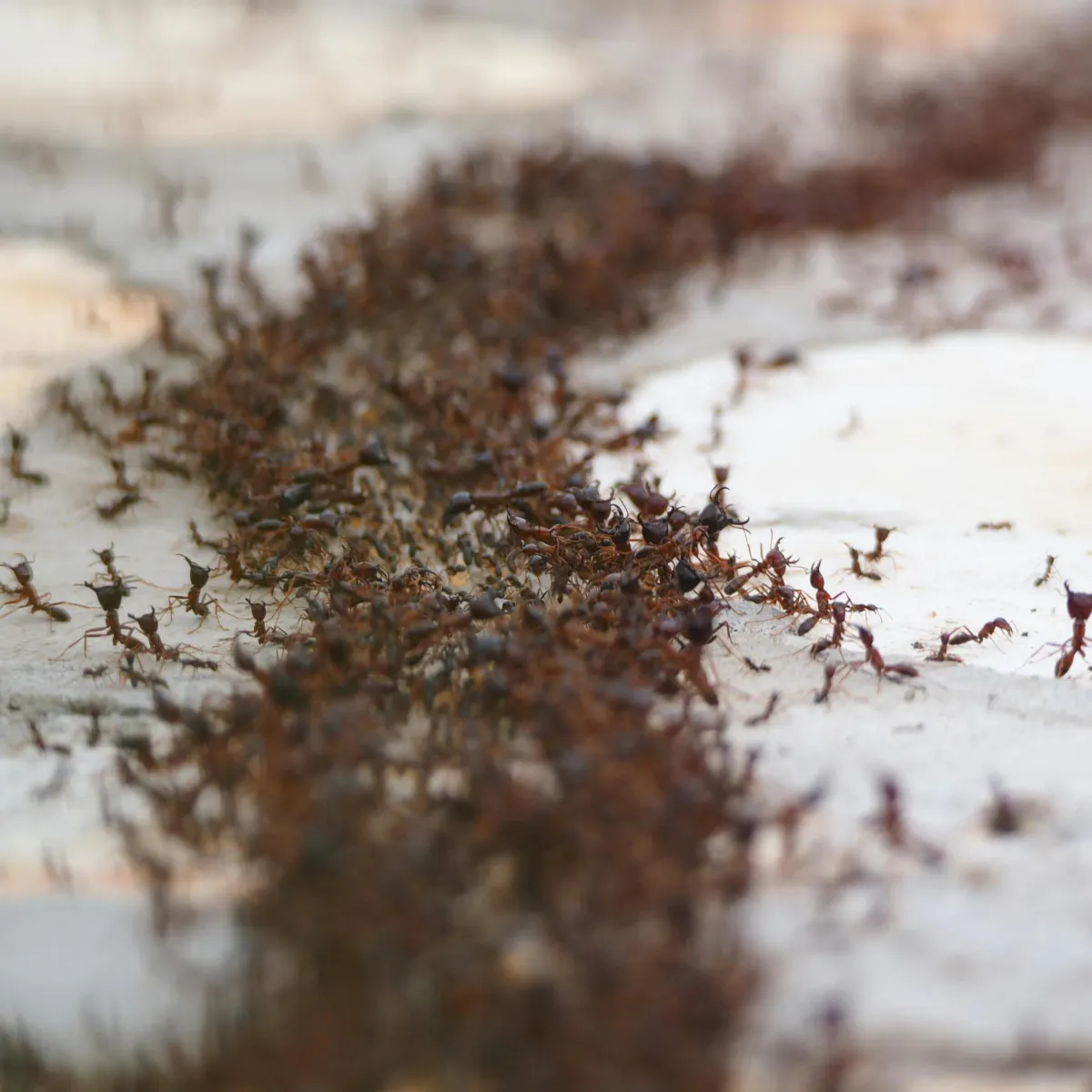
Ant colonies can spread through maintained grass, leaving small soil mounds, active trails, and areas where walking or playing becomes uncomfortable. Some ants are simply a nuisance, while others can sting when their nests are disturbed.

DeSoto Turf provides outdoor ant control services through scheduled lawn treatments. Pest applications are included during visits two and seven of the regular eight-treatment lawn care program. 

RECOGNIZE ANT ACTIVITY EARLY

How Can You Tell If Ants Are Taking Over Your Lawn?

Ant colonies are not always easy to spot. Some create noticeable mounds, while others leave only small openings in the soil.

Common signs include:

  • Small soil mounds: Loose soil appears between grass blades or across open lawn areas.
  • Visible ant trails: Groups of ants move repeatedly across the same section of grass.
  • Active nesting sites: Ants emerge from small openings in the soil.
  • Recurring colonies: New mounds appear after previous activity has declined.
  • Stinging insects: Certain species, particularly fire ants, can sting when disturbed.
  • Displaced soil: Nest-building activity may leave small bare or uneven patches.

A few ants in the lawn do not necessarily indicate a serious infestation.

 

UNDERSTAND WHAT IS HAPPENING BELOW THE GRASS

Why Do Ant Colonies Keep Returning?

Ants live in organized colonies, often with extensive nesting areas beneath the soil.  The ants moving across the lawn are usually workers searching for food or maintaining the nest

Underground Colonies

Ants may build chambers and tunnels beneath maintained grass.

The visible mound represents only part of the nesting area.

Multiple Nesting Sites

Some species establish several connected nesting locations.

Activity may continue even when one visible mound is no longer active.

Favorable Soil Conditions

Soil moisture, temperature, and available shelter influence where ants establish colonies.

Nearby Colonies

New ants can move into the lawn from surrounding areas and ant colonies.

Seasonal Activity

Ant movement and nesting behavior change with weather conditions.

Ant populations may become more noticeable during warmer periods or after rainfall.

DeSoto Turf’s scheduled lawn treatments help manage recurring ant activity, although new colonies can develop between applications.

NOT EVERY ANT IS THE SAME

What Types of Ants May Appear in Your Lawn?

Several ant species can establish nests in outdoor soil.

Identifying the type of ant helps explain the activity and determine whether treatment is appropriate.  

For more information about outdoor ant species, see the University of Georgia Extension’s guide to common neighborhood insects.

Fire Ants

Fire ants are among the more concerning lawn pests because they can sting repeatedly.

They often build mounds in sunny, open areas.

When a mound is disturbed, workers may emerge quickly to defend the colony.

Fire ant activity deserves particular attention in lawns used by children and pets.

Field Ants

Field ants commonly nest in soil and may create visible mounds in grassy areas.

Most are primarily a nuisance, although some species can bite when disturbed.

Large colonies may produce noticeable soil disturbance.

Pavement Ants

Pavement ants often nest beneath sidewalks, driveways, and other hard surfaces.

They may forage across nearby grass.

Colonies beneath pavement are not necessarily reached by routine lawn treatments.

Other Soil-Nesting Ants

Several other ant species may establish colonies in turf.

Their nesting habits, mound sizes, and activity levels vary.

Our service pros assess the ants present and whether the activity falls within the lawn treatment program.

LAWN TREATMENTS DESIGNED FOR RECURRING PESTS

How Does DeSoto Turf Handle Outdoor Ant Control?

DeSoto Turf offers ant control through its lawn treatment programs.

The appropriate option depends on the level of activity and whether additional insect applications are needed.

Explore DeSoto Turf’s lawn care services or learn about the 6-Treatment Insect Program.

Scheduled Pest Treatments

The regular eight-treatment lawn care program includes pest applications during visits two and seven.

These applications are part of a broader lawn maintenance schedule that also includes fertilization and weed control.

Additional Insect Treatments

Homeowners experiencing persistent ant activity in grass can consider the separate six-treatment insect program.

This program provides additional applications, typically coordinated with visits two through seven of the regular lawn care schedule.

Treatment Limited to Grass

The six-treatment insect program targets ants in maintained grass.

It does not cover flower beds, shrubs, wooded areas, or indoor spaces.

Realistic Treatment Expectations

Ant populations do not always decline immediately.

Under the six-treatment insect program, it may take two to three applications before a noticeable reduction in ant activity occurs.

Results depend on the species, colony size, and surrounding conditions.

Address Attracting Conditions

Food, moisture, and accessible nesting locations can contribute to recurring activity.

Our service pros explain practical steps that may help reduce these conditions.

Plan Additional Lawn Treatments

The six-treatment insect program includes applications typically coordinated with visits two through seven of the regular lawn care schedule.

It targets ants in grass only. Flower beds, shrubs, wooded areas, and indoor spaces are excluded.

A CLEAR PROCESS FOR LAWN ANT CONTROL

What Happens During an Ant Control Visit?

Review the Ant Problem

Our service pros review where ants have been appearing and whether the activity is new or recurring.

Visible mounds, trails, and stinging incidents can help identify problem areas.

Inspect the Grass

We examine accessible lawn areas for signs of active colonies.

The inspection helps determine whether the reported problem falls within the program's treatment coverage.

Assess Ant Activity

Our service pros consider the likely ant species, number of visible colonies, and level of activity.

Not every ant found in grass requires treatment.

Confirm the Treatment Program

We determine whether the scheduled lawn pest applications are appropriate or whether the additional insect program should be considered.

Apply the Lawn Treatment

Pest applications are completed according to the selected program and product label instructions.

The regular lawn care program includes pest treatments at visits two and seven.

Explain Aftercare and Next Steps

Our service pros provide watering, reentry, and monitoring instructions based on the treatment used.

We also explain when further applications are scheduled and what results to expect.

KNOW WHAT RESULTS TO EXPECT

How Long Does Treatment Take to Work?

The time required to reduce ant activity varies.  Some applications may reduce visible populations relatively quickly. Others take longer to affect active colonies.  Results depend on several factors.

Ant Species

Different species have different nesting habits and responses to treatment.

Colony Size

Larger colonies may require more time to manage.

Nesting Depth

Ants living deeper in the soil may be less exposed to certain surface applications.

Treatment Schedule

DeSoto Turf’s regular lawn care program includes pest treatments at visits two and seven.  The separate insect program provides additional applications for recurring activity.

Surrounding Conditions

New ants may move into the lawn from nearby untreated areas.

UNDERSTAND WHY MOUNDS REAPPEAR

Can Ants Return After Lawn Treatment?

Yes. Ants are common outdoor insects, and new colonies may establish themselves after treatment.  Several things can explain recurring activity.

A lawn may appear to have fewer ants for a period before new activity becomes noticeable.  DeSoto Turf’s treatment programs provide scheduled pest management rather than a promise of permanent ant elimination.

Existing Colonies Remain Active

Some colonies may be difficult to reach completely, depending on their nesting location.

New Colonies Develop

Reproductive ants can establish nests in suitable soil.

Ants Move From Nearby Areas

Untreated land and neighboring properties may contain active colonies.

Weather Changes Activity

Rainfall and temperature can influence when ants are visible.

KEEP YOUR LAWN EASIER TO MONITOR

How Can You Reduce Recurring Ant Problems?

Routine lawn maintenance cannot prevent every ant colony, but it can make pest activity easier to notice and manage.  The University of Georgia Extension’s fire ant management guide provides additional information about ant colonies and outdoor treatment methods.

Keep Grass at the Right Height

Maintain the recommended mowing height for your grass variety.

Overgrown areas can make small mounds harder to identify.

Avoid Excessive Irrigation

Water according to the lawn’s needs.

Unnecessary moisture can contribute to conditions that attract certain insects.

Check for New Mounds

Inspect open lawn areas regularly.

Pay attention to places where colonies have appeared before.

Remove Unnecessary Debris

Keep maintained grass clear of unused materials and debris that can shelter insects.

Avoid Disturbing Fire Ant Mounds

Fire ants may respond aggressively when their nests are disturbed.

Keep children and pets away from suspected active mounds.

Report Recurring Activity

If ants remain active after scheduled treatments, tell your service pro.

This helps determine whether additional lawn insect treatments should be considered.

LAWN PEST CONTROL WITH A CLEAR PLAN

Why Choose DeSoto Turf for Outdoor Ant Control?

DeSoto Turf provides ant control as part of its lawn treatment services.  Our service pros focus on identifying activity in maintained grass, explaining treatment options, and setting realistic expectations.

Homeowners benefit from:

  • Scheduled pest applications within the regular lawn care program.
  • A separate insect program for recurring problems.
  • Assessment of visible ant activity in the grass.
  • Treatment schedules that coordinate with lawn care visits.
  • Clear information about service coverage.
  • Product-specific aftercare instructions.
  • Practical guidance for monitoring new colonies.

OUTDOOR ANT CONTROL QUESTIONS ANSWERED

Frequently Asked Questions

Why Choose DeSoto Turf for Ant Control?

DeSoto Turf provides outdoor ant control through its regular lawn care program, with additional applications if required.  Our service pros assess activity in the grass, explain the treatment schedule, and recommend the appropriate option for your lawn.