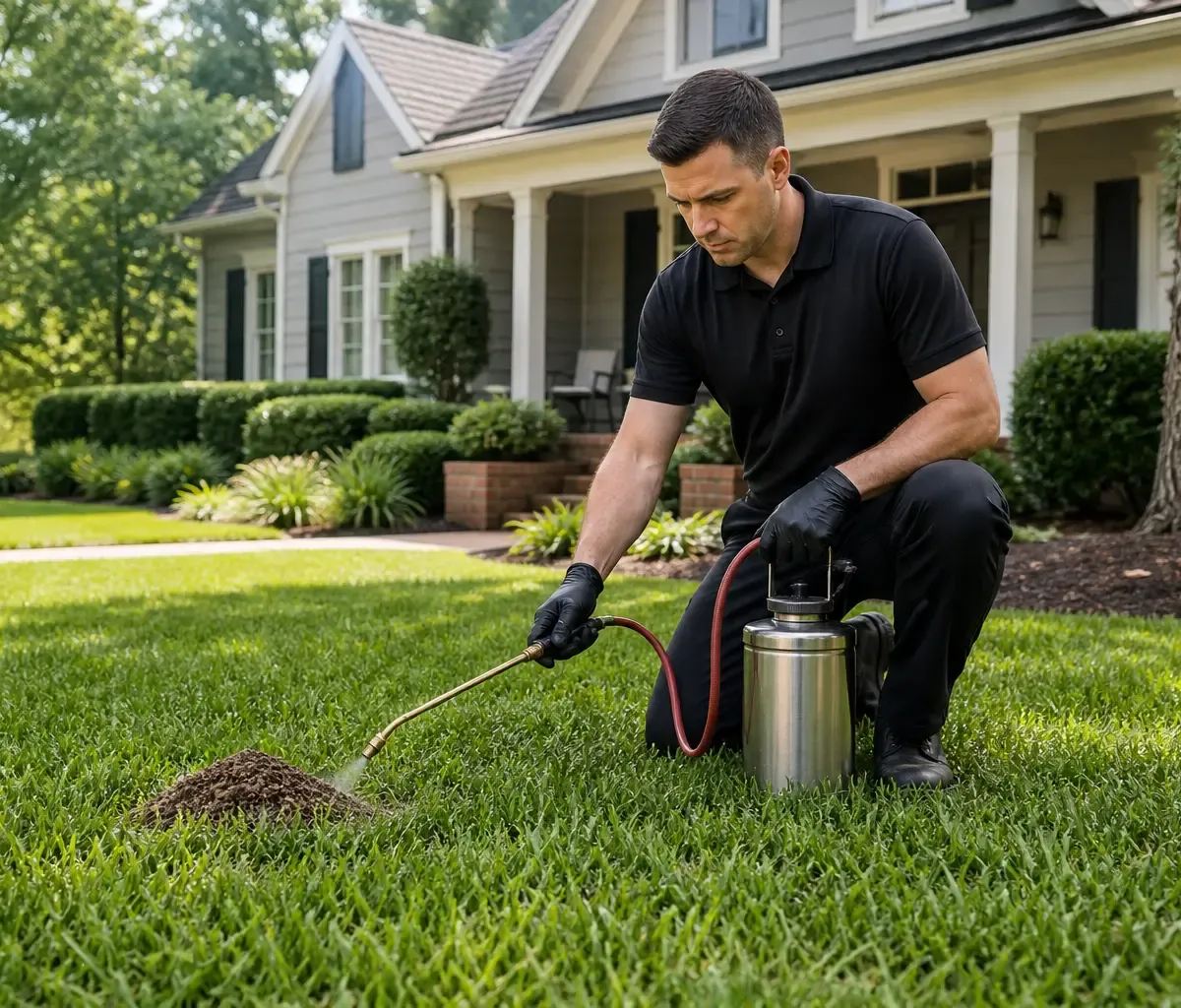
PEST CONTROL FOR YOUR HOME
At DeSoto Turf, we provide pest control services that focus on identifying pest activity, locating problem areas, and choosing treatments suited to the insects involved.
Our service pros look beyond the pests you can see. We check likely entry points into the home, sheltered areas, moisture problems, and places where insects may be nesting or feeding.
Some infestations can be addressed with targeted treatments. Others need follow-up care or changes around the property to reduce recurring activity.
We explain what we find, what treatment is appropriate, and what you can do to help keep pests from returning.
UNDERSTANDING PEST ACTIVITY
Finding an insect indoors does not always mean there is a large infestation. However, repeated sightings can indicate that pests have found a reliable way inside.
Small openings around doors, windows, pipes, and foundations can provide access. Insects may also enter through damaged screens, gaps around utility lines, or items brought into the home.
Food and moisture can encourage them to remain. Crumbs beneath appliances, open food containers, leaking pipes, and damp cabinets may provide the conditions certain pests need.
Outdoor conditions matter too. Heavy vegetation against the house, accumulated leaves, and clutter near exterior walls can give insects places to shelter.
Spraying the insects you see may provide temporary relief, but it does not necessarily address where they are coming from.
Our service pros examine the pattern of activity outside your homebefore recommending treatment.
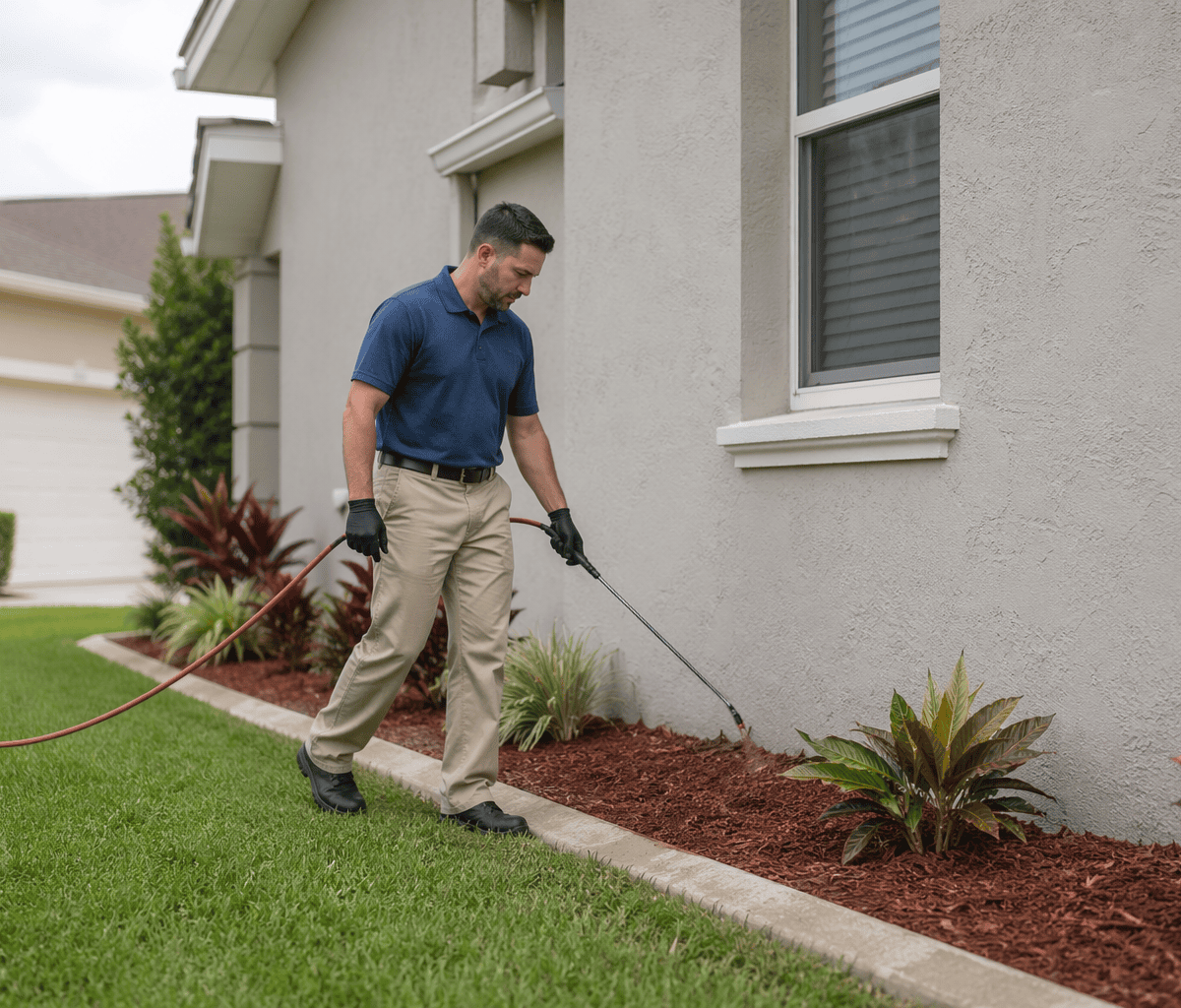
COMMON HOUSEHOLD PESTS
Different pests require different approaches. Their nesting habits, feeding behavior, and preferred hiding places all influence how they should be managed.
Ants often enter homes while searching for food or water.
You may notice trails along countertops, baseboards, windowsills, or exterior walls.
Some species nest outdoors and enter through small openings. Others establish colonies inside wall voids or other sheltered spaces.
Our service pros look for trails, entry points, and areas where ants may be nesting before selecting a treatment.
Cockroaches commonly hide in dark, protected spaces.
Kitchens, bathrooms, cabinets, utility areas, and spaces behind appliances may provide suitable shelter.
Their activity can increase where food, water, and hiding places are readily available.
We check affected areas and recommend treatment based on the cockroach species and signs of infestation.
Spiders may be found near windows, exterior lights, storage areas, and other places where insects gather.
Many spiders are harmless and help control other insects. However, some species can present a concern, particularly when found in frequently used areas.
Our service pros assess the activity and identify where targeted treatment or removal may be appropriate.
Reducing the insects that attract spiders can also help limit recurring activity.
Fleas and ticks may be brought into the home on pets, clothing, or other animals.
Fleas can develop in carpets, pet bedding, and sheltered areas. Ticks are more commonly associated with vegetation and outdoor environments.
These pests require different control methods.
We consider the affected areas and whether outdoor treatment, household cleaning, or veterinary care is also needed.
Some insects enter homes seasonally or after changes in weather.
They may gather around exterior lights, enter through gaps, or seek shelter in garages and storage spaces.
Not every occasional insect requires a pesticide application.
We first determine what is present and whether the activity calls for treatment or preventive changes.
HOW WE APPROACH PEST CONTROL
We do not use one treatment for every insect.
Our approach begins with identifying the pest and understanding where the activity is occurring.
Ants, cockroaches, spiders, and other insects have different habits.
A treatment that works for one pest may not be suitable for another.
Our service pros look for signs of activity, hiding places, and conditions that may be allowing the problem to continue.
We check areas where pests may enter or gather.
These can include door thresholds, window frames, exterior openings, utility penetrations, and sheltered areas around the foundation.
Inside the home, we may review cabinets, plumbing areas, baseboards, and other places connected to reported activity.
Once we understand the problem, we select a treatment suited to the pest and affected area.
Depending on the infestation, the approach may involve a bait, a crack-and-crevice application, or another labeled control method.
We avoid unnecessary applications where no treatment is needed.
Pesticides alone may not prevent recurring infestations.
We may recommend sealing openings, repairing leaks, improving food storage, or removing clutter that provides shelter.
These steps can make the property less attractive to pests.
Some pest problems respond to one treatment. Others may require additional attention because of the insect’s life cycle, nesting behavior, or extent of the infestation.
We explain what to expect and which signs should be reported after treatment.
THE PEST CONTROL PROCESS
We begin by asking what you have noticed.
The type of insect, where it appears, and how long the activity has continued can help us narrow down the problem.
Recurring sightings in one room may point to a different source than insects appearing throughout the property.
Our service pros examine the places where pests have been seen.
We look for insects, droppings, nesting material, trails, entry points, and other signs of activity.
We also check nearby areas that may be connected to the infestation.
After identifying the pest and reviewing the affected spaces, we choose a suitable control method.
Some insects are best addressed with bait. Others may require targeted applications in cracks, crevices, or exterior areas.
The treatment depends on the pest, product label, and conditions found during inspection.
Our service pros apply the selected treatment where it is needed.
We pay attention to areas where pests travel, hide, or enter the property.
Treatment locations vary depending on the insect and whether the activity is indoors, outdoors, or both.
Before finishing, we explain any precautions associated with the treatment.
We also point out conditions that may need attention, such as moisture problems, unsealed openings, or food sources.
If additional treatment may be necessary, we explain why and what activity to watch for.
UNDERSTANDING PEST CONTROL RESULTS
There is no single timeline for every infestation.
Some treatments begin affecting exposed insects relatively quickly. Others, including certain baits, work more gradually as pests feed on the material.
Ant activity may continue while workers move between food sources and nesting areas. Cockroach infestations may take longer to manage when insects are hiding in multiple locations or when eggs have not yet hatched.
An occasional insect sighting after treatment does not always mean the application failed. However, continued heavy activity or new signs of infestation should be reported.
Our service pros can help determine whether the treatment needs more time, the source remains active, or another approach is required. We can not promise that every pest will disappear immediately or that insects can never return.
PREVENTING RECURRING PEST PROBLEMS
Store dry goods, pet food, and other accessible food in sealed containers.
Wipe countertops and clean spills promptly.
Pay attention to crumbs and grease beneath appliances, where insects may find food without being noticed.
Many household pests depend on moisture.
Check beneath sinks, around plumbing fixtures, and near appliances for leaks.
Repair dripping faucets and avoid leaving standing water in trays or containers.
Inspect gaps around doors, windows, utility lines, and exterior openings.
Repair damaged screens and replace worn door sweeps where needed.
Sealing access points can reduce the number of insects entering from outdoors.
Stacks of cardboard, unused boxes, and crowded storage spaces provide hiding places.
Keep storage areas organized and avoid leaving materials directly against damp walls.
This also makes it easier to notice new pest activity.
Trim vegetation that touches exterior walls.
Remove heavy leaf accumulation and keep stored materials away from the foundation when practical.
These changes can reduce sheltered spaces where pests gather before entering the home.
THE DESOTO TURF APPROACH
At DeSoto Turf, we believe pest control should begin with understanding the problem.
Our service pros look at the insects involved, where they are active, and what may be allowing them to remain around the property.
We do not assume every insect sighting calls for the same product or application.
Some problems need targeted treatment. Others also require better sanitation, moisture control, or repairs around entry points.
We explain the treatment and the steps homeowners can take afterward.
Our goal is to address active pest problems while avoiding unnecessary applications and helping customers understand what may cause recurring activity.
COMMON PEST CONTROL QUESTIONS
Our service pros focus on identifying the insects involved, finding the affected areas, and choosing treatments that fit the problem.
If you are seeing insects indoors or around your home’s exterior, contact our team to discuss the problem and available pest control services.