PROTECT YOUR GRASS FROM LAWN PESTS
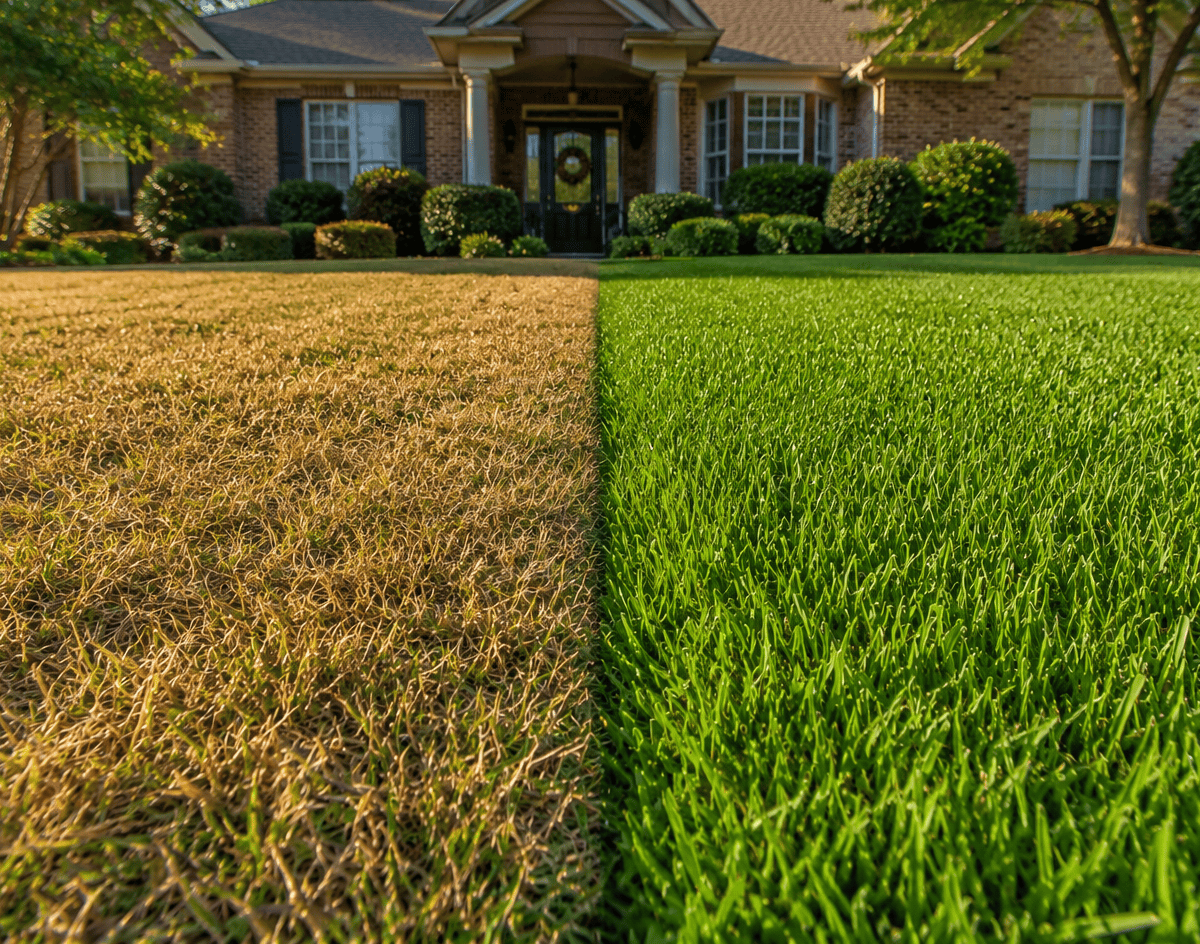
Brown patches, thinning grass, and damaged roots are not always caused by poor watering or a lack of fertilizer. Insects may be feeding on the lawn before the damage becomes obvious.
At DeSoto Turf, we provide lawn pest control to help homeowners identify and address insects that damage grass. Our service pros look for signs of grubs, chinch bugs, sod webworms, armyworms, and mole crickets before recommending treatment.
Different insects attack different parts of the grass. Some feed on roots beneath the soil, while others damage stems or blades above ground. We focus on identifying the pest, checking the affected areas, and choosing a treatment that addresses the problem.
UNDERSTANDING LAWN INSECT DAMAGE
A lawn can develop brown patches even when it receives regular water and fertilizer.
Some insects feed on grass roots, reducing the plant’s ability to absorb moisture. Others chew through leaves or damage stems near the soil surface.
The first signs may include irregular brown patches, thinning grass, loose turf, or areas that do not recover after watering.
However, insect damage can resemble drought stress, lawn disease, or fertilizer problems. Applying an insecticide without checking the cause may not solve anything.
Our service pros examine the damaged grass, surrounding healthy areas, and soil surface for signs of pest activity.
The goal is to determine whether insects are responsible and which pest needs attention.
IDENTIFYING LAWN PESTS
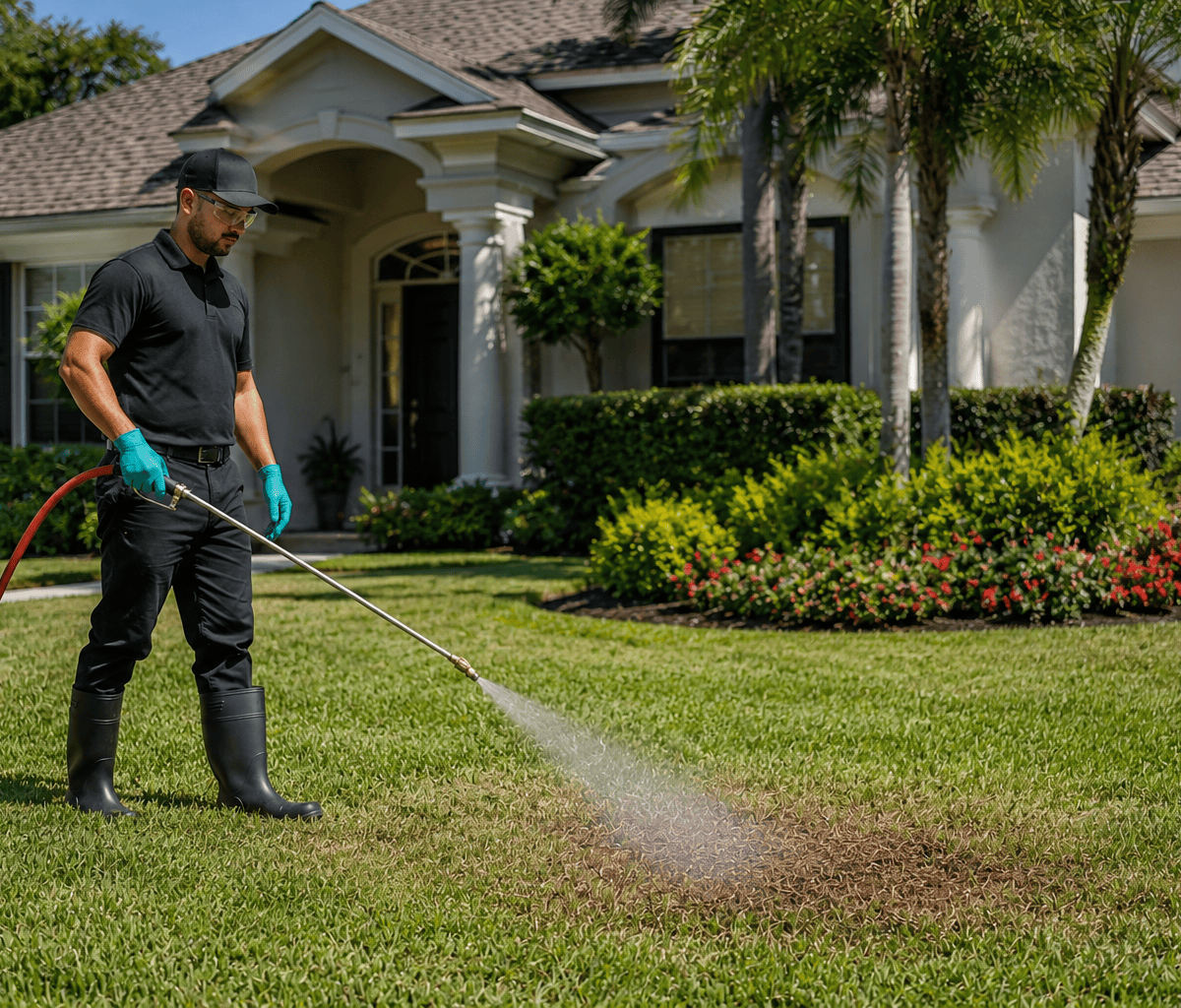
Our service pros check the affected areas to identify the pest before recommending treatment.
Grubs live beneath the soil and feed on grass roots. As the damage spreads, you may notice brown patches, thinning grass, or sections of turf that lift easily from the ground.
Our service pros inspect the root zone for active grubs and check how much damage has occurred. We then recommend treatment based on the infestation and the insects’ stage of development.
Chinch bugs feed on grass tissue, often leaving yellow or brown patches that look like drought damage. The affected areas may continue spreading even when the lawn receives enough water.
We check the edges of damaged turf for active chinch bugs and examine the surrounding grass. Once we confirm the problem, we focus treatment on the affected areas to help prevent further damage.
Sod webworms are caterpillars that chew grass blades, leaving thin, ragged patches across the lawn. They often feed at night and hide near the soil surface during the day.
Our service pros look for feeding damage and active larvae before treating. We focus on areas where the caterpillars are feeding rather than applying insecticide across unaffected grass unnecessarily.
Armyworms can cause noticeable lawn damage in a short time. These caterpillars feed on grass blades and may leave large patches looking closely cut, thin, or stripped of green growth.
We inspect damaged areas for active armyworms and check how far the infestation has spread. When treatment is needed, we address the feeding areas promptly to help limit additional grass loss.
Mole crickets tunnel beneath the lawn, disturbing soil and damaging grass roots. You may notice raised tunnels, loose soil, thinning grass, or patches that struggle to recover.
Our service pros check for tunneling and active mole crickets before recommending treatment. We focus on the affected areas and consider the insects’ development stage when selecting the appropriate approach.
THE DESOTO TURF APPROACH
We inspect damaged grass and nearby areas for signs of insect feeding.
Grubs require examination of the root zone. Chinch bugs are often found near the edge of damaged turf. Caterpillars may leave feeding marks on grass blades, while mole crickets can disturb the soil.
Finding the correct pest helps us avoid treating the wrong problem.
Some infestations remain limited to small sections of turf. Others spread across larger areas.
We review the extent of visible damage and look for active insects before determining the treatment area.
A few insects in the lawn do not always justify a full-property application.
Different pests may require different control methods.
The treatment must suit the insect, its development stage, the grass type, and the product’s labeled use.
We consider whether a targeted application is appropriate and follow the applicable product instructions.
Our service pros focus on the areas where pest activity has been identified.
Depending on the insect and product, treatment may involve affected turf, the root zone, or surrounding areas where insects are feeding.
We avoid treating unaffected sections unnecessarily.
Insect control does not immediately restore damaged grass.
After treatment, the lawn needs time to recover. Grass with surviving roots may begin producing healthy growth, while severely damaged areas may require additional repair.
We explain the aftercare instructions and what changes to watch for.
THE LAWN PEST CONTROL PROCESS
We begin with the sections of lawn where thinning, discoloration, or unusual grass loss has appeared.
Our service pros look at the pattern of damage and check whether the symptoms suggest insects or another lawn problem.
We also ask when the damage began and whether it has been spreading.
The inspection depends on the suspected pest.
We may examine the soil, grass roots, thatch layer, or the boundary between healthy and damaged turf.
Finding active insects helps us determine whether treatment is warranted.
Once the pest has been identified, we select an appropriate control approach.
Grubs, chinch bugs, caterpillars, and mole crickets do not necessarily respond to the same treatment.
Application timing can also matter because some insects are easier to control during particular stages of development.
Our service pros apply the selected treatment according to its label and the conditions found during inspection.
The treated area may vary depending on the pest and how widely it has spread.
We also account for watering requirements and any precautions needed after application.
Before leaving, we explain what homeowners should do after treatment.
Some products require irrigation, while others need time to remain on treated surfaces.
We also explain why damaged grass may not recover immediately and when additional lawn care may be necessary.
UNDERSTANDING TREATMENT RESULTS
Insect control and lawn recovery are two different things.
The time needed to reduce pest activity depends on the insect, its development stage, the treatment used, and whether the product reaches the affected area.
Visible damage may remain after the insects have been controlled.
Grass blades that have already turned brown will not become green again. Recovery depends on whether the growing points, roots, and surrounding healthy grass remain capable of producing new growth.
For example, turf damaged by grubs may take longer to recover if substantial root loss has occurred.
Chinch bug or caterpillar damage may improve as healthy grass produces new blades, provided the infestation has been controlled and growing conditions are suitable.
Severely damaged areas may require sod, seeding where appropriate, or other lawn repair.
We do not recommend applying additional fertilizer simply because the grass looks brown. The cause of the damage needs to be addressed first.
PREVENTING FURTHER LAWN DAMAGE
Walk through the lawn regularly and look for areas that are thinning or changing color.
Pay attention to patches that expand despite appropriate watering.
Early changes are easier to investigate before large sections of turf are damaged.
Excessive irrigation can weaken grass and contribute to other lawn problems.
Water according to the grass’s needs and allow the soil to drain between watering cycles.
Standing water and constantly saturated ground should be investigated.
Cutting grass too short can increase stress and slow recovery.
Use sharp mower blades and avoid removing more than one-third of the grass blade during a single mowing.
A thick thatch layer can interfere with water movement and provide sheltered areas for some lawn insects.
Thatch should be evaluated before removal because a thin layer is normal.
Where soil compaction is also present, core aeration may help improve soil conditions.
Healthy grass is generally better able to recover from moderate stress.
Our weed control and fertilization services support seasonal grass growth, but fertilizer cannot eliminate an active insect infestation.
Pest control and lawn nutrition address different problems.
WHY CHOOSE DESOTO TURF
Lawn insects can cause damage that looks similar to several other turf problems.
At DeSoto Turf, we believe treatment should begin with finding out what is happening in the grass.
Our service pros look for pest activity, review the damaged areas, and consider whether the symptoms could have another cause.
We distinguish between root-feeding insects, surface-feeding insects, and pests that disturb the soil.
That distinction matters because one treatment is not suitable for every lawn pest.
We also recognize that controlling the insects is only part of the work. The grass may need time and appropriate care to recover.
Our broader lawn care services can help address seasonal weed growth, fertilization needs, and soil conditions alongside pest-related concerns.
COMMON LAWN PEST QUESTIONS
Grubs, chinch bugs, sod webworms, armyworms, and mole crickets can damage different parts of the lawn. Treating the wrong pest may leave the problem unresolved.
At DeSoto Turf, we focus on identifying the insects responsible, checking the affected areas, and selecting an appropriate treatment.