TARGETED INSECT CONTROL FOR YOUR LAWN
Fleas, ticks, and ants can make spending time on your lawn less enjoyable. These pests may remain active throughout the warmer months, even when your grass is regularly mowed and maintained.
DeSoto Turf’s 6-Treatment Insect Program helps manage flea, tick, and ant activity through six scheduled applications to your grass. The program typically runs alongside the middle six visits of our eight-treatment lawn care program, providing insect control during the main treatment season.
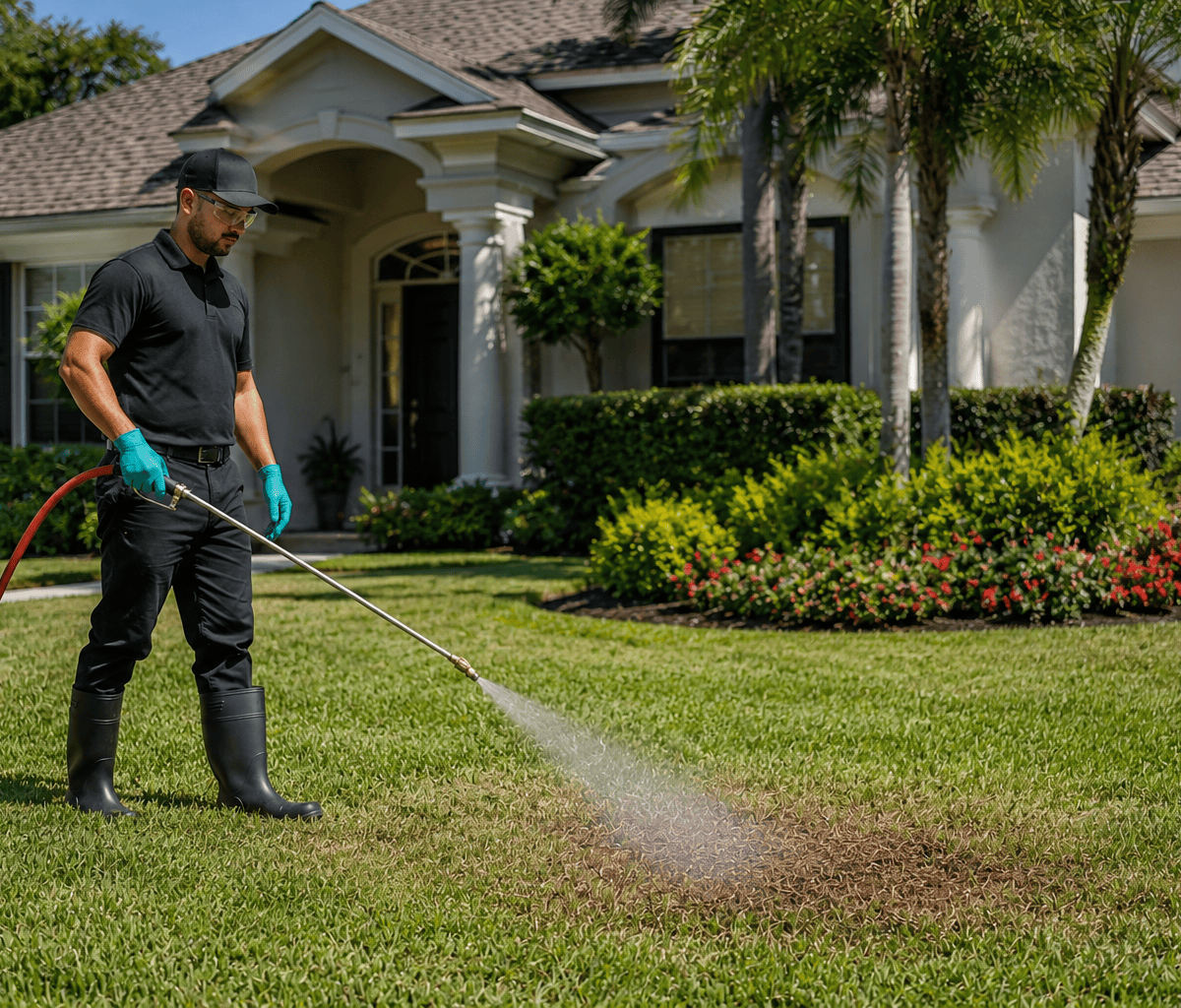
Our service pros apply treatments to the grass only. We do not treat inside homes, flower beds, shrubs, or wooded areas as part of this program.
Results develop over time, particularly with ants. Homeowners typically begin noticing a difference in ant activity after two to three applications.
WHY REGULAR INSECT CONTROL MATTERS
Fleas, ticks, and ants can remain active in a lawn for different reasons. Some arrive on pets or wildlife, while others establish colonies in the soil. Even after an application, new insects may enter the yard or emerge from areas where they were previously developing.
A single treatment may affect insects that come into contact with the product, but it cannot prevent every new pest from appearing.
Fleas have several life stages, and not all stages respond to treatment in the same way. Ticks may be carried into the yard by animals, while ants can continue moving between their colonies and surrounding grass.
Our six-treatment program provides repeated applications during the lawn care season. Each visit helps maintain a consistent approach to managing these three pests in treated grass areas.
The goal is to reduce insect activity over time rather than promise immediate elimination. Our service pros follow the scheduled program and explain what homeowners can reasonably expect as treatments progress.
THREE PESTS, ONE LAWN PROGRAM
Our program focuses specifically on fleas, ticks, and ants. These are the only three pests included in the six-treatment service.
Applications are made to the grass, where treatment can help manage insect activity in the covered lawn areas.
Fleas can enter your lawn on dogs, cats, and wildlife. Once present, they may develop in outdoor areas where animals regularly spend time.
Adult fleas feed on animal hosts, while eggs can fall into the surrounding environment. This means flea activity may continue even when individual insects are affected by treatment.
Our service pros apply flea control products to the grass as part of the scheduled program.
Because fleas can remain on pets and develop indoors, lawn treatment alone may not resolve every flea problem. Keeping pets on veterinarian-recommended flea prevention is an important part of managing exposure.
Our treatment focuses on fleas in the grass. It does not include treating pets, pet bedding, or indoor spaces.
Ticks can be carried into residential lawns by pets, wildlife, and other animals. They may be encountered in grassy areas, although many ticks also favor wooded edges, leaf litter, and other vegetation.
Our insect program includes applications targeting ticks in the treated grass.
The service does not extend into wooded sections, shrubs, or other areas outside the lawn.
Ticks may continue entering a property after treatment, particularly when animals move between treated and untreated areas.
Homeowners should continue checking pets for ticks and taking precautions when spending time outdoors. The CDC’s tick prevention guidance provides additional information about reducing tick exposure.
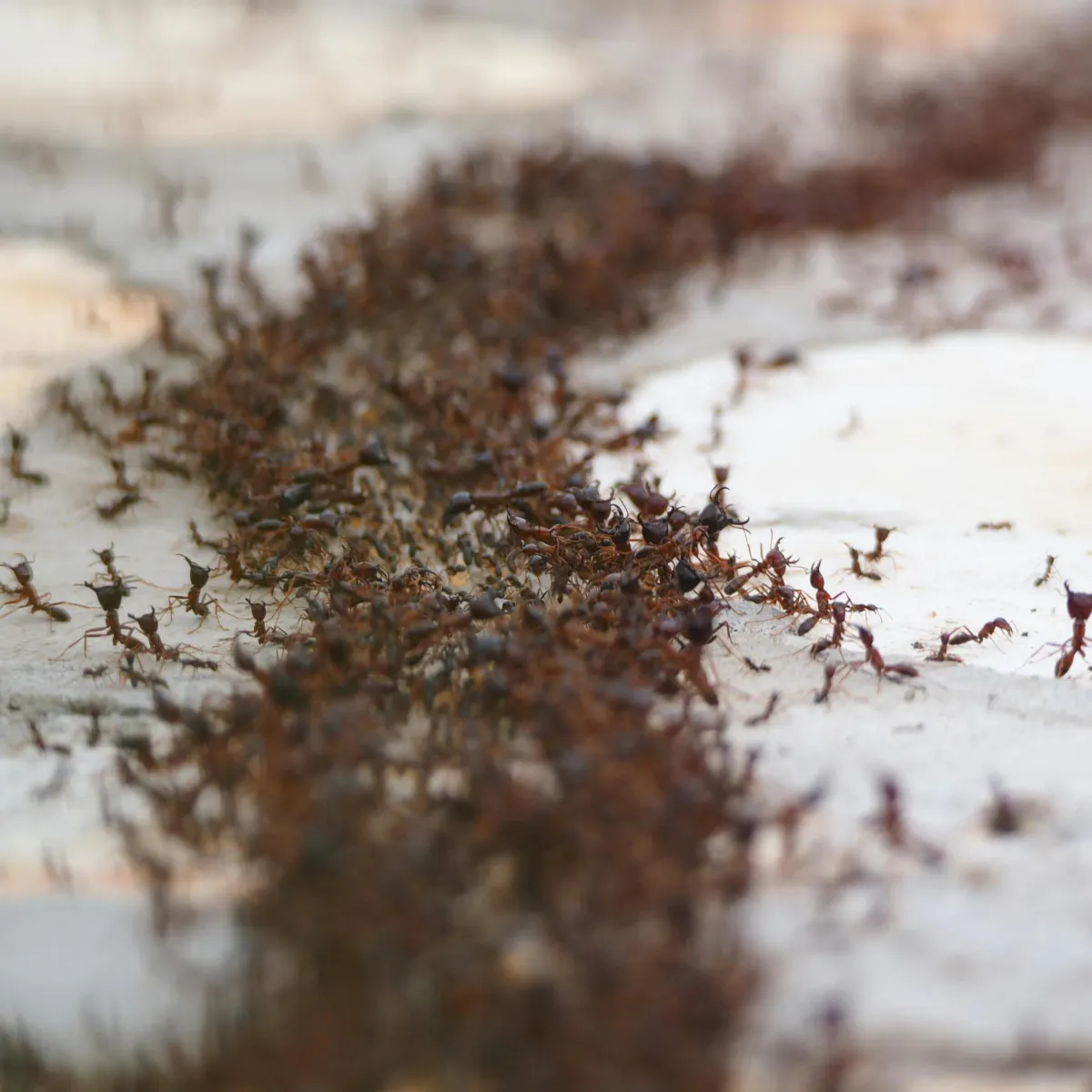
Ants are common in residential lawns. They build colonies in the soil and send workers across the grass to gather food.
Some colonies are small and difficult to notice, while others produce visible mounds or regular trails of activity.
Our program includes scheduled grass applications targeting ants.
Unlike some insect activity that may change sooner, ant control often requires more time. Homeowners typically notice a difference after two to three applications.
This is because ant colonies may continue producing workers, and insects can remain active in areas that have not been directly exposed to treatment.
Our service pros follow the six-application schedule to help manage ant activity in the lawn. The program does not include indoor ant treatment or applications outside the grass.
A CONSISTENT APPROACH TO LAWN INSECT CONTROL
Our insect program is designed to fit alongside DeSoto Turf’s regular lawn care schedule.
Rather than arranging six unrelated service visits, insect applications are typically coordinated with six consecutive visits during our eight-treatment lawn care program.
The program includes six applications throughout the designated treatment period.
Each application targets fleas, ticks, and ants in the grass.
The schedule helps provide repeated treatment during the season, when insect activity may continue or change.
Our service pros apply insect control products to the lawn.
The program does not include treatments inside your home, around interior entry points, in flower beds, or throughout wooded sections.
We explain the treatment area before service so homeowners understand exactly what is covered.
The insect program is typically scheduled alongside the second through seventh visits of our eight-treatment lawn care program.
This allows insect control to follow an established service schedule while other lawn care treatments address their own purposes.
Insect control and lawn fertilization or weed management are different services. Each has its own treatment goals.
Insects may remain active between scheduled visits.
Fleas and ticks can arrive on animals, while ants may continue moving through the soil and grass.
Repeated applications provide an opportunity to address ongoing activity throughout the program.
We want homeowners to understand what the service can accomplish.
The program is intended to help manage fleas, ticks, and ants in treated grass. It does not guarantee that every insect will disappear or that new pests cannot enter the lawn.
With ants, noticeable improvement typically takes two to three applications.
YOUR SIX-TREATMENT INSECT PROGRAM
Each application targets fleas, ticks, and ants in the grass. The visits are typically coordinated with the middle six appointments of our eight-treatment lawn care program.
The treatment approach remains focused on the same three pests throughout the schedule.
The first application begins the insect control program.
Our service pros apply the selected product to the grass according to its label instructions.
This treatment begins addressing flea, tick, and ant activity in the lawn.
Homeowners may still notice insects after the initial visit, especially when ants have established colonies or fleas are continuing to develop.
The first application starts the process, but it is not intended to provide complete control on its own.
The second application continues treatment for the three covered pests.
Some insects may have remained active after the initial visit, while others may have entered the lawn since then.
Our service pros apply the next scheduled grass treatment to continue managing that activity.
For ants, this is around the point when some homeowners begin noticing a difference.
The amount of improvement depends on the level of insect activity and the conditions around the lawn.
The third application provides another scheduled treatment to the grass.
By this stage, homeowners typically begin noticing a difference in ant activity, although some colonies may remain active.
Fleas and ticks can also continue entering the yard on pets or wildlife.
Our service pros maintain the program's grass-only approach, targeting the same three pests.
If you have noticed particular areas of insect activity, you can share those observations with our team.
The fourth application continues the treatment schedule.
Outdoor insect activity can change as temperatures, rainfall, and lawn conditions change.
Ants may continue moving through surrounding soil, while fleas and ticks may be introduced by animals using the yard.
Our service pros apply the scheduled treatment to the grass and provide any relevant aftercare instructions.
The purpose of this visit is to continue managing the covered pests as the treatment season progresses.
The fifth application continues treatment for fleas, ticks, and ants.
Even when homeowners have noticed less activity, insects may still be present or enter the lawn from surrounding areas.
Our service pros follow the established application schedule.
We also encourage homeowners to continue regular mowing, appropriate watering, and pet flea and tick prevention.
These habits support the broader effort to manage outdoor insect exposure.
The sixth application completes the standard program.
Our service pros perform the final scheduled grass treatment for fleas, ticks, and ants.
This application is typically coordinated with the seventh visit of our eight-treatment lawn care program.
After the visit, homeowners should continue following normal lawn maintenance practices and any product-specific instructions.
The six-treatment insect program does not normally include an application during the final visit of the eight-treatment lawn care schedule.
AFTER YOUR INSECT TREATMENT
Aftercare instructions depend on the product used and the conditions during the application.
Some products have specific watering requirements, while others require the treated grass to remain undisturbed for a period.
Our service pros explain what applies to your lawn after each visit.
To help the treatment work as intended:
Avoid applying extra products because insects are still visible shortly after treatment.
Using additional insecticides without understanding how they interact with the scheduled application may create unnecessary exposure or interfere with the treatment plan.
The EPA provides useful information about pesticide safety around homes and families.
UNDERSTANDING TREATMENT RESULTS
Results vary depending on the insect, the level of activity, and conditions around the property.
Some insects may be affected after contacting treated grass. Others may remain in untreated areas or enter the lawn after an application.
Fleas can continue developing from eggs and immature stages. Ticks may arrive on animals, while ants can remain active within colonies that extend beneath the soil.
Because these pests behave differently, homeowners should not expect identical results from every application.
For ants, it typically takes two to three applications before a noticeable difference develops.
That does not mean all ant activity will disappear after the third visit. Some colonies may remain active, and new ants may move into the lawn.
The six-treatment schedule provides repeated applications throughout the designated treatment period.
Our service pros can explain the expected response and help homeowners understand when continued activity should be discussed.
LAWN CONDITIONS AND INSECT ACTIVITY
The condition of your lawn can influence where insects are found and how easily their activity is noticed.
Grass height, moisture, shade, and animal movement all affect the outdoor environment.
Fleas may develop in protected areas where pets or wildlife regularly rest. Ticks can be introduced by animals moving through the property, while ants establish colonies in the soil.
Regular mowing helps maintain the grass and makes it easier to spot visible ant activity.
Proper irrigation is also important. Excessive watering can create persistently damp conditions, while uneven drainage may leave certain areas wetter than others.
Maintaining your lawn does not guarantee that insects will stay away.
Pets and wildlife may continue introducing fleas and ticks, and ants can establish new colonies even in well-maintained grass.
Our insect program works alongside regular lawn maintenance by providing scheduled applications for the three covered pests.
Homeowners can also explore our lawn care services for information about seasonal grass maintenance.
CARE BETWEEN APPLICATIONS
Our six-treatment program provides scheduled applications, but homeowners can take additional steps to manage conditions that may encourage insect activity.
These steps are particularly useful when pets regularly use the lawn or when insects have been noticeable in certain areas.
If fleas are present inside your home, lawn treatment alone may not address the problem.
Similarly, ants entering kitchens or other indoor spaces fall outside the grass-only treatment area.
Our service pros can explain the boundaries of the program so you know what to expect.
Keep grass at the appropriate height for the variety growing in your lawn.
Follow a watering schedule that supports healthy grass without leaving the soil unnecessarily wet.
Fix leaking sprinkler heads and areas where water collects.
Continue veterinarian-recommended flea and tick prevention.
Ticks may attach to animals in treated or untreated areas.
Remove unnecessary debris and maintain areas where pets regularly rest.
Food left outdoors can attract ants and other animals.
Pay attention to recurring mounds or trails in the grass.
Observe any watering, mowing, or reentry requirements provided after service.
Let our team know when insects remain particularly noticeable between applications.
KNOW WHAT YOUR SERVICE INCLUDES
The program has a defined treatment area and covers three specific pests.
Understanding those limits helps homeowners choose the right service for their needs.
Our service pros apply treatment targeting fleas in the lawn.
The program does not treat pets, indoor flooring, furniture, or other areas where fleas may be present.
Veterinary flea prevention remains important.
The program includes applications targeting ticks in treated grass areas.
It does not include wooded areas, shrubs, or other untreated vegetation.
Homeowners should continue checking for ticks after outdoor activities.
Our program includes scheduled ant control applications to the lawn.
Homeowners typically begin noticing a difference after two to three applications.
Indoor ant infestations and areas outside the grass are not included.
The six-treatment program does not include indoor pest control.
Cockroaches, spiders, and other household pests are not covered by this service.
If insects are active inside your home, they may require a different type of pest management.
The program does not include treatment for grubs, armyworms, chinch bugs, sod webworms, or mole crickets.
It is specifically designed for fleas, ticks, and ants in the grass.
WHY HOMEOWNERS CHOOSE DESOTO TURF
DeSoto Turf provides a defined insect control program with a clear treatment schedule and specific pest coverage.
Our service pros focus on the grass and the three insects included in the program. We explain what the service covers, how the applications are scheduled, and what homeowners should expect as treatments progress.
With our 6-Treatment Insect Program, you receive:
Our team understands that insect activity does not always disappear after one visit.
We focus on providing the scheduled service, explaining treatment expectations, and helping homeowners understand what is included.
If you are already using our regular lawn care services, the insect program can be coordinated with the designated visits.
You can learn more about DeSoto Turf and our approach to lawn maintenance on our Services page.
COMMON QUESTIONS ABOUT LAWN INSECT CONTROL
Fleas, ticks, and ants can remain active in your grass throughout the warmer months. Managing these pests often requires more than a single application.
DeSoto Turf’s 6-Treatment Insect Program provides six scheduled grass treatments focused specifically on these three insects.
Our service pros explain how the program works, when applications are scheduled, and what results you can reasonably expect.
If you are interested in adding insect control to your lawn care routine, contact DeSoto Turf to ask about our 6-Treatment Insect Program.
Our team can help you understand the treatment schedule, service coverage, and next steps.