LOCAL LAWN TREATMENTS

Lawn Care Services in Walls, MS

Lawns in Walls face hot summers, heavy rain, exposed growing areas, compacted ground, and weeds that return at different times of the year. DeSoto Turf provides weed control, fertilization, core aeration, and flower bed pre-emergent treatments for local properties.

We focus on the lawn and planting beds. Our services do not include mowing or general landscape maintenance.


Why Walls Lawns Need a Year-Round Plan?

Bermuda and zoysia are common warm-season grasses in North Mississippi. They grow actively during warm weather, slow down as temperatures fall, and enter dormancy during winter. Weeds do not follow the same schedule.

Cool-season weeds can grow while the lawn is dormant. Warm-season weeds begin appearing as soil temperatures rise. Bare patches, closely cut grass, and thin turf give them more room to spread.

Walls sits where the Delta meets the bluff, so ground conditions can vary from one property to another. Rich soil may support fast growth, but compacted or poorly drained sections can still limit the lawn. Open yards may get strong sun all day, while areas near buildings and mature trees behave differently.

Scheduled care lets us address these changes as they happen instead of relying on one application to carry the lawn through the year.

A SIMPLE SERVICE PROCESS

How DeSoto Turf Approaches the Property?

Each service begins with what is happening in the lawn or flower beds.

Review the Conditions

We note the grass type, weeds, thin areas, compacted sections, sunlight, flower beds, and signs of water movement.

Match the Service

We determine whether the property needs the eight-treatment lawn program, core aeration, flower bed pre-emergent, or a practical combination.

Choose the Timing

Weather, turf growth, weed stage, and soil conditions guide when we complete the service.

Treat the Intended Area

We apply the selected treatment to the appropriate lawn or bed sections and avoid unnecessary applications elsewhere.

Check the Response

Later visits allow us to track progress, note new activity, and adjust the service when the property shows a different need.

EIGHT VISITS WITH A PURPOSE

How the Lawn Program Changes Through the Year?

The eight-treatment program is not eight copies of the same application. Each visit responds to the season, turf condition, and weed activity present at that time.

Early treatments address weeds growing in dormant or newly greening grass. Fertilization begins when the warm-season lawn is ready to use it. Summer visits support active turf while monitoring weeds that thrive in heat and moisture.

Later treatments adjust as growth begins to slow. This avoids forcing tender growth when the grass should be preparing for cooler weather.

Multiple visits also give us a better view of the property. We can see whether treated weeds are declining, whether the turf is filling open areas, and whether a recurring problem points to mowing, shade, water, or soil conditions.

Early-Season Control

Cool-weather weeds may be easiest to spot while Bermuda or zoysia is still brown. Treating them early reduces competition as the lawn begins growing again.

Active-Growth Support

Once the grass is actively growing, it can use nutrients more effectively. Weed control during this period is selected for the turf and the weeds present.

Late-Season Adjustment

As temperatures change, the treatment changes too. The goal is to manage weeds without pushing unnecessary growth late in the season.

Why Weed Identification Matters?

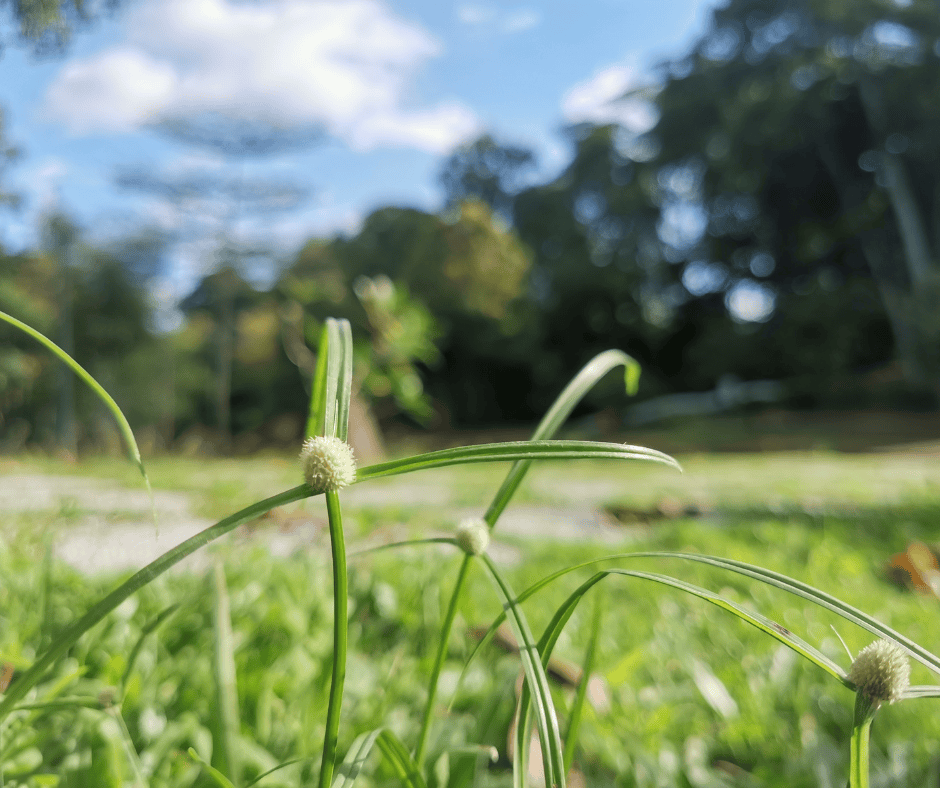
A sedge, broadleaf weed, and unwanted grassy plant may all appear in the same lawn, but they do not respond to the same product. Treating every green plant as one problem can leave the actual weed untouched.

The weed’s growth stage also matters. Young, actively growing weeds often respond differently from mature plants that have already produced seed. Rain, temperature, and mowing can also affect how a treatment performs.

  • Weeds in Dormant Grass

    Winter weeds can stand out against dormant Bermuda and zoysia. Their growth may begin months before the lawn turns green.

  • Weeds in Wet Ground

    Sedges and moisture-loving weeds can point to overwatering, runoff, or a low section that stays damp. Treatment controls the weed, but the wet condition may also need attention.

  • Weeds in Bare Areas

    Open soil gives weed seeds light and room to grow. Thin turf may be connected to shade, scalping, compaction, drainage, or repeated traffic.

    Mississippi State University Extension provides additional guidance on weed control for lawns and gardens.

What Compaction Does to a Well Lawn?

Soil can become packed through regular foot traffic, equipment use, construction activity, and repeated travel over the same route. The surface may look normal even when the root zone has little usable space.

Compaction restricts air and water movement. Grass roots may remain shallow, and rainfall may run across the surface instead of soaking evenly into the ground.

  • Thinner Turf

    Grass growing in compacted soil may struggle to spread into worn areas. The lawn may remain thin even when you apply fertilizer.

  • Uneven Watering

    Water may collect in one section and run away from another. Increasing sprinkler time can worsen wet areas without helping compacted ground.

  • Slow Recovery

    A lawn under regular traffic may not recover quickly after heat or dry weather. Aeration gives the roots better access to the soil around them.

    Core aeration creates openings without turning over the entire lawn. The plugs left on the surface break apart naturally as they dry, receive rain, and are mowed.

    For more information, see Mississippi State University Extension\’s guidance on establishing and managing a home lawn.

Strong Sun Can Help Grass and Stress It

Many Walls properties include open lawn areas with long periods of direct sunlight. Bermuda performs well in bright conditions, but exposed turf can also lose moisture quickly during hot, dry weather.

The same property may include shaded sections beside a house, fence, or mature tree. These areas may stay damp longer and grow more slowly.

  • Sunny Sections Grow Faster

    Warm-season grass that gets enough light can spread quickly in summer. Regular mowing at the correct height helps it remain dense without being scalped.

  • Shaded Areas Stay Thinner

    Bermuda needs substantial sunlight. Grass growing in dense shade may stay thin no matter how much fertilizer it gets.

  • Edges Behave Differently

    Grass beside pavement, buildings, and driveways may experience reflected heat. These sections can dry before the middle of the lawn does.

    Mississippi State University Extension explains how light levels affect different turf species in its guide to managing turfgrass for shade.

RUNOFF LEAVES CLUES

Watch What Happens After a Heavy Rain

A fast summer downpour can reveal more about the property than a sprinkler cycle. Water movement may show where soil is compacted, where the grade drops, and where material is leaving the lawn or flower beds.

Water Crossing the Lawn

Flowing water can carry loose soil, fertilizer, and grass clippings downhill. It may also leave one section saturated while another receives little usable moisture.

Mulch Leaving the Bed

Washed mulch often points to concentrated runoff or a bed edge that cannot hold material during heavy rain. A pre-emergent barrier may also be disturbed when the surface moves.

Puddles That Remain

Standing water may come from a low grade, compacted soil, downspout discharge, or excessive irrigation. Aeration can help compaction, but it does not replace proper drainage work.

DeSoto County explains how runoff moves across properties and into local waterways on its Stormwater Management page.

Why Pulling Weeds Is Not the Whole Plan?

Pulling visible weeds improves the appearance of a flower bed, but new weeds can emerge from seeds already present in the soil. Warm weather and frequent moisture can bring another flush soon after cleanup.

Pre-emergent works below the surface by interfering with the establishment of targeted annual weeds. It is most useful when applied before those weeds germinate.

  • Existing Weeds Come First

    Pre-emergent does not remove mature weeds. You may need to pull or treat existing growth before applying a preventive product.

  • Mulch Still Has a Role

    A suitable mulch layer helps limit light at the soil surface and reduces moisture loss. Thin, washed, or disturbed mulch leaves more space for weeds.

  • Soil Disturbance Breaks Protection

    Digging, cultivating, or moving large amounts of mulch can interrupt the treated layer. Let us know if you plan planting or bed work after treatment.

    The Mississippi State University Extension guide to ornamental bed weed management also explains how irrigation, mulch, and plant spacing affect weed growth.

PROGRESS YOU CAN SEE

What to Expect as the Property Responds?

Results depend on the service, the season, and the condition of the lawn or flower bed before treatment.

Treated Weeds Decline

Some weeds begin curling or changing color within days. Others take longer, especially during cool weather or when the plants are mature.

Turf Gains Density

Fertilization supports active grass, but it cannot replace sunlight, correct mowing, or suitable watering. Open areas close gradually as healthy turf spreads.

Soil Accepts Water Better

Aeration creates channels through compacted ground. Improvement occurs below the surface as water and air gain better access to the root zone.

Fewer Bed Weeds Emerge

Pre-emergent reduces targeted annual weeds. It does not stop perennial weeds, existing plants, or every seed introduced after treatment.

CARE BETWEEN OUR VISITS

What to Do After Treatment?

The work completed after a visit can affect how well the service performs.

After a Lawn Treatment

Follow the watering and mowing directions provided for that application. Avoid cutting the lawn before the recommended waiting period has passed.

After Core Aeration

Leave the soil plugs on the lawn. They will break down naturally. Water as directed, but don\’t keep the ground constantly wet.

After Flower Bed Treatment

Avoid digging through the treated surface or moving large amounts of mulch. Contact us before adding plants if the bed was recently treated.

Nearby Communities We Serve

DeSoto Turf serves properties across North Mississippi and the greater Memphis area.

QUESTIONS FROM HOMEOWNERS

Walls Lawn Care FAQs

These answers cover common questions about lawn and flower bed treatments in Walls.

Lawn and Flower Bed Care for Walls

Tell DeSoto Turf where weeds keep returning, which areas stay wet, and whether the lawn feels thin or hard underfoot. Those details help us determine the right service for the property.

We can build the plan around scheduled lawn treatments, core aeration, flower bed pre-emergent, or the services that make sense together. Each one has a clear purpose and a place in the seasonal schedule.

DeSoto Turf will review the concern, explain the recommended service, and help you take the next step toward a healthier lawn and cleaner flower beds in Walls.