BETTER SOIL, HEALTHIER GRASS
DeSoto Turf offers core aeration services to help relieve compacted soil and improve growing conditions for grass. Mechanical aeration removes small plugs of soil from the lawn, creating openings for air, water, and nutrients to move into the root zone.
Over time, regular foot traffic, mowing equipment, and natural soil settling can leave the ground tightly packed. Grass may continue growing, but its roots have less room to spread.
Core aeration addresses that restriction directly. It is particularly useful for lawns with hard soil, shallow roots, poor water absorption, or excessive thatch buildup.
UNDERSTANDING SOIL COMPACTION
Watering and fertilizing cannot always correct poor soil conditions.
When soil becomes compacted, the spaces between soil particles shrink. Water has more difficulty moving into the ground, and roots may struggle to grow through the tightly packed soil.
Some areas remain thin despite regular lawn treatments. Others develop surface runoff, puddles, or hard ground that becomes difficult to penetrate.
A layer of thatch can make the problem worse. Thatch is the accumulation of partially decomposed stems, roots, and other plant material between the grass and soil.
A thin layer is normal. Excessive buildup can interfere with moisture movement and healthy root development.
Core aeration helps open the soil without removing the existing lawn.
HOW MECHANICAL AERATION WORKS
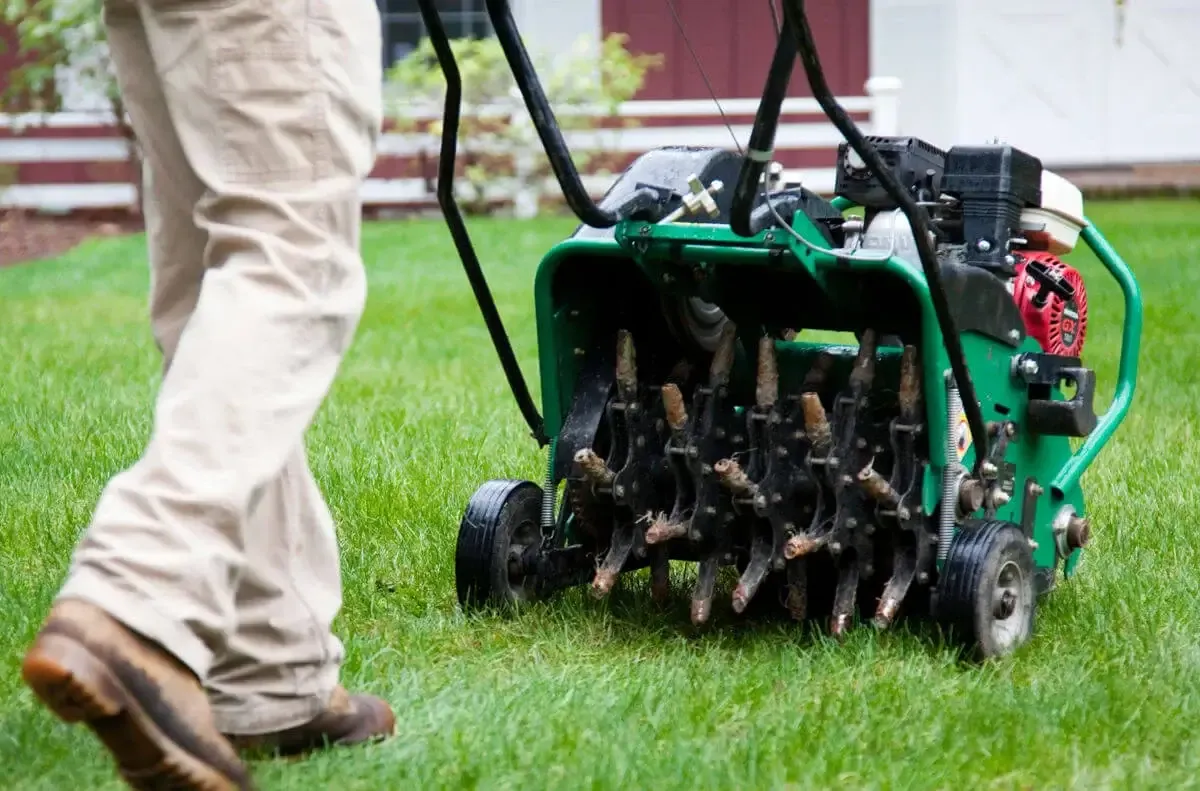
Unlike spike aeration, which pushes soil aside, mechanical core aeration physically removes small soil plugs.
The openings allow the surrounding soil to loosen gradually while creating more space for roots, water, and air.
A core aerator uses hollow tines to pull plugs of soil from the ground.
Removing soil rather than simply pushing it aside helps reduce compaction in the treated area.
This is especially useful where repeated traffic or equipment use has compressed the soil.
Water may run across compacted ground instead of soaking into the root zone.
Aeration creates openings that help water enter the soil more easily. Better penetration can reduce surface runoff caused by compaction, although aeration cannot correct every drainage problem.
Grass roots need both moisture and oxygen.
When soil is tightly packed, roots may remain shallow. Aeration creates room for roots to extend into the surrounding soil as the lawn continues growing.
Excessive thatch can limit the movement of air and moisture into the soil.
Core aeration brings soil plugs to the surface and improves contact between soil and the thatch layer, helping support natural decomposition.
The University of Minnesota Extension’s guidance on thatch management explains how hollow-tine aeration can improve soil conditions and support thatch breakdown.
Fertilizer and water work best when the root zone can receive them.
Core aeration can complement a regular lawn treatment program by addressing soil conditions that weed control and fertilization alone cannot correct.
THE CORE AERATION PROCESS
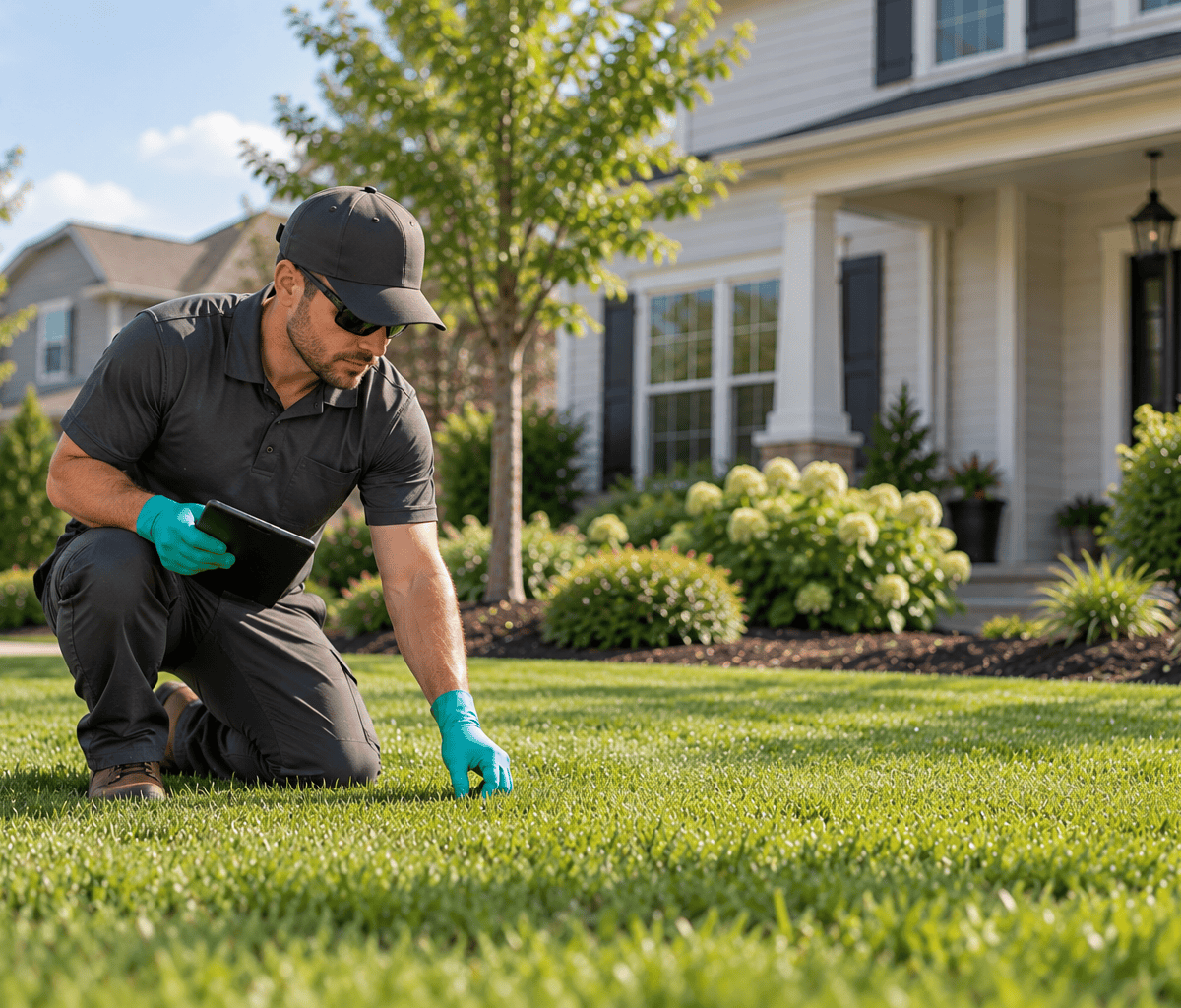
Before aeration, the lawn should be reviewed for signs of compaction, excessive thatch, and areas where water struggles to soak into the ground.
Hard soil, thinning grass, and surface runoff may indicate that aeration would be useful.
The lawn should also be actively growing and healthy enough to recover from the treatment.
The soil needs enough moisture for the aerator's tines to penetrate properly.
Very dry, hard ground can prevent effective plug removal. Saturated soil may become muddy or suffer additional damage from equipment.
Sprinkler heads, shallow irrigation lines, and other obstacles should be identified and marked before work begins.
A mechanical aerator passes across the lawn, pulling small cores of soil to the surface.
The openings extend into the root zone, allowing air and moisture to move through areas that were previously compacted.
Additional passes may be appropriate where compaction is more severe.
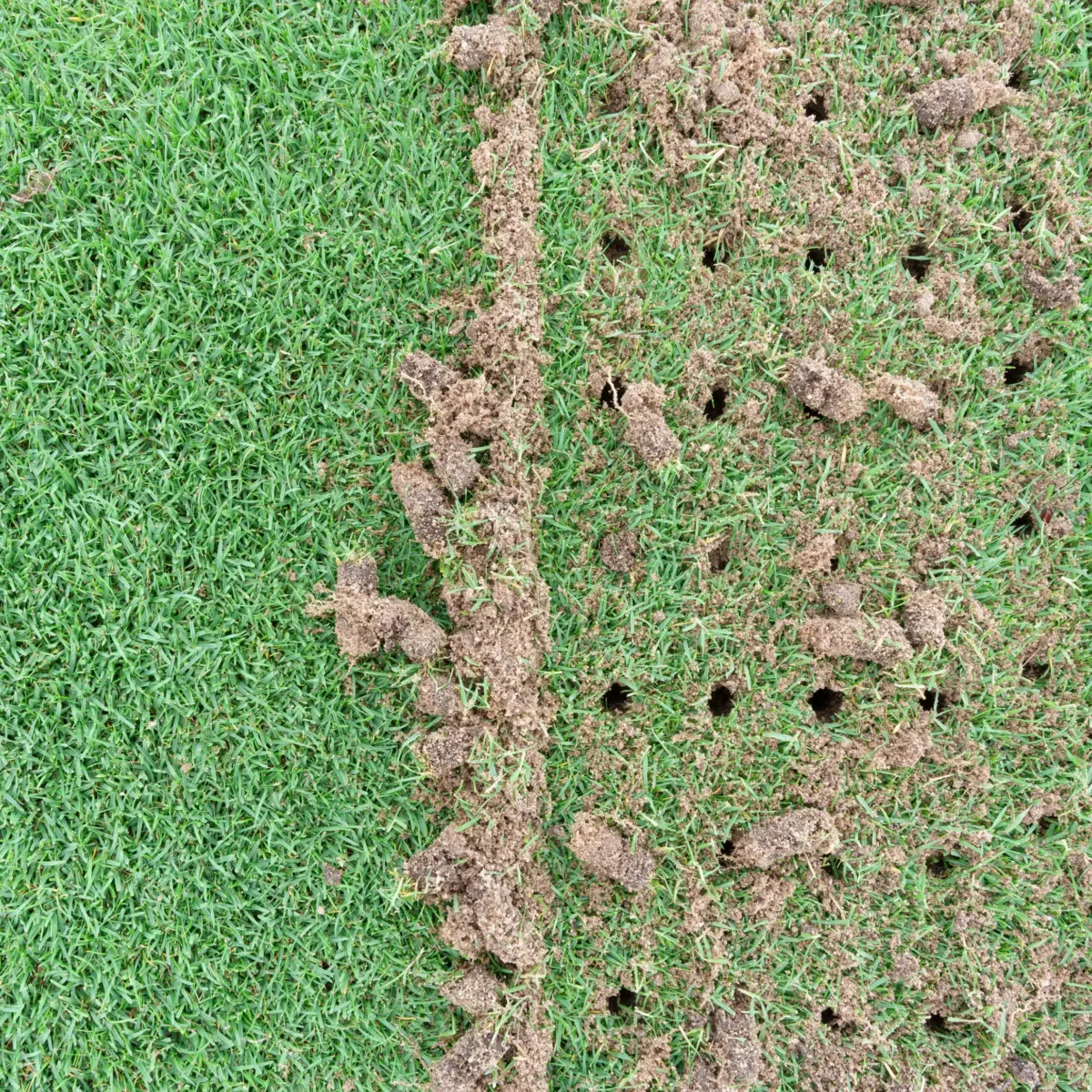
The small plugs left on the grass are a normal part of core aeration.
They contain soil and microorganisms that can benefit the lawn as the plugs dry and crumble.
There is usually no need to collect them. Rainfall, irrigation, and normal lawn activity help them break apart.
After aeration, regular watering and mowing can continue according to the lawn's condition.
Aeration may also be coordinated with fertilization or overseeding when appropriate.
DeSoto Turf's established weed control and fertilization program can help support continued lawn care after the soil has been opened.
AFTER YOUR AERATION SERVICE
Core aeration does not normally require the same precautions as a pesticide application. However, the lawn still needs appropriate care while the openings remain visible.
Small holes and scattered soil plugs are expected.
The plugs generally break apart over time, and the openings gradually close as the grass and surrounding soil settle.
If aeration is performed alongside another lawn treatment, follow the aftercare instructions for both services.
UNDERSTANDING AERATION RESULTS
The first visible change is the pattern of holes and soil plugs across the lawn.
Improvements in soil conditions happen gradually.
Water may begin entering previously compacted areas more easily. As grass continues growing, roots can use the newly opened spaces.
The lawn will not necessarily become greener immediately. Aeration does not supply fertilizer, remove existing weeds, or replace damaged grass.
Thin areas may improve as the surrounding turf grows, but severely bare sections may need seeding, sod, or additional care.
Core aeration also has limits. It will not repair broken irrigation lines, correct major grading problems, or eliminate standing water caused by inadequate drainage.
The goal is to improve the soil environment so existing grass can grow more effectively.
CARE BETWEEN AERATION SERVICES
Walking or driving over the same sections of lawn can compress the soil over time.
Avoid parking vehicles on the grass and limit repeated equipment traffic, particularly when the ground is wet.
Soil that stays saturated is more vulnerable to damage from foot traffic and equipment.
Water when needed, allowing moisture to move into the soil without leaving the lawn constantly wet.
Cutting grass too short can weaken the lawn and expose more soil to direct sunlight and traffic.
Keep mower blades sharp and avoid removing more than one-third of the grass blade during a single cut.
Thatch is not the same as ordinary grass clippings.
A thick, tightly packed layer of stems and roots can restrict moisture movement. If the layer becomes excessive, aeration or another thatch-management treatment may be appropriate.
Healthy grass is better able to recover from routine use and seasonal stress.
Regular weed control and fertilization can support turf growth, while aeration addresses soil compaction when needed.
DeSoto Turf provides an eight-treatment lawn care program that includes seasonal weed prevention and fertilization.
CORE AERATION OR OTHER LAWN SERVICES
Mechanical aeration is particularly useful when the soil is hard, roots are shallow, or water has difficulty soaking into the ground.
The process physically removes soil plugs, creating openings through compacted areas.
Aeration can help manage thatch by improving contact between the soil and the accumulated organic layer.
However, severe thatch buildup may require additional removal methods.
Core aeration can improve seed-to-soil contact when overseeding is appropriate.
Seed still needs suitable moisture, temperature, and growing conditions to establish.
Fertilization provides nutrients, while aeration improves physical soil conditions.
These services address different needs and can complement one another.
Aeration will not correct every lawn problem.
Severe drainage issues, disease, insect infestations, and extensive turf loss may need separate treatment.
A lawn with poor growth should be evaluated before assuming compaction is the only problem.
WHY CHOOSE DESOTO TURF
DeSoto Turf includes aeration among its established lawn care services.
The company identifies compaction as a condition that may become noticeable during the growing season, particularly when grass is recovering from winter stress or showing uneven growth.
Core aeration addresses a different part of lawn health than weed control or fertilizer.
By removing soil plugs, mechanical aeration helps create better conditions for root growth and water movement.
It can be used alongside DeSoto Turf’s regular lawn treatment program when soil conditions call for additional attention.
Learn more about the company’s approach on the DeSoto Turf About page.
COMMON AERATION QUESTIONS
Compacted soil can make it difficult for grass to develop healthy roots, even when watering and fertilization are consistent.
Core aeration removes small plugs of soil to improve air and water movement and create better growing conditions beneath the grass.
DeSoto Turf offers aeration as part of its broader lawn care services. If you are seeing hard soil, shallow roots, or water that struggles to soak into the ground, contact DeSoto Turf to discuss whether mechanical aeration is appropriate for your lawn.