LOCAL SOIL CARE IN HERNANDO
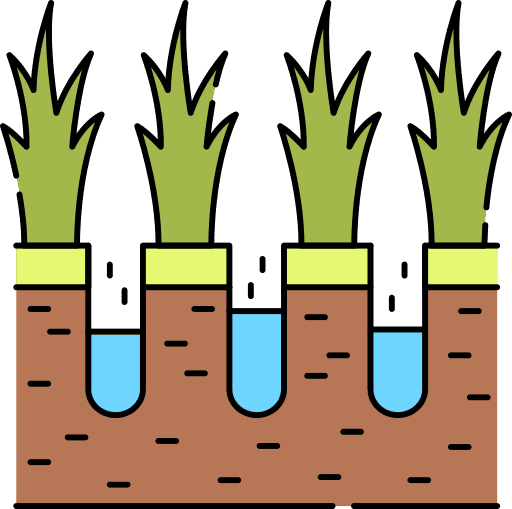
DeSoto Turf helps homeowners in Hernando, MS, understand their lawn’s soil conditions and choose appropriate care. Liquid aeration is a term used for soil-conditioning treatments applied across the grass without mechanically removing soil plugs.
Some liquid products are designed to improve how water spreads through soil. Others contain ingredients intended for broader soil conditioning. Their benefits depend on the formulation and the problem being treated.
Our service pros look at how water moves through the lawn, where grass is struggling, and whether the soil is compacted before discussing treatment options. A liquid application may have a role in addressing certain moisture-related problems, but it does not replace mechanical core aeration for relieving compacted ground.

UNDERSTANDING LIQUID SOIL TREATMENTS
Liquid aeration products vary. Some contain wetting agents, while others include humic substances or additional soil-conditioning ingredients.
We consider what the product is designed to do rather than assuming every liquid treatment provides the same benefit.
Certain wetting agents are designed to improve water movement through soil that has become water-repellent.
When water beads up or moves around a dry area instead of soaking in, an appropriate product may help moisture spread more evenly.
The result depends on the soil condition and the product used.
A lawn may have dry patches even when nearby grass receives enough moisture.
If sprinkler coverage is adequate and water-repellent soil is contributing to the problem, a wetting-agent treatment may be worth considering.
Our service pros check for irrigation problems first because a liquid product cannot repair a blocked sprinkler or broken irrigation line.
Liquid soil conditioners are applied over the lawn surface.
They do not use hollow tines, remove cores, or leave the visible holes associated with mechanical aeration.
This makes the application different from core aeration, both in how it is performed and what it can accomplish.
Some liquid products contain humic substances or other soil-conditioning ingredients.
Their effects vary, and not every product has strong evidence supporting its advertised claims.
We look at the intended use and the lawn’s actual needs before considering an application.
Liquid treatments do not physically loosen tightly packed soil.
If shallow compaction is restricting root growth or causing runoff, core aeration is generally the more established option.
We do not recommend treating severe compaction as though it were simply a soil-wetting problem.
THE LIQUID AERATION PROCESS
The exact application depends on the product selected and the soil condition being addressed. Our service pros review the lawn before determining whether a liquid soil-conditioning treatment is appropriate.
We begin by looking at where water collects, runs off, or fails to soak in.
Our service pros also check the condition of the grass and ask whether the problem appears after rainfall, irrigation, or extended dry weather.
These details help us understand what may be happening beneath the surface.
We look for hard ground, heavily used areas, and signs of uneven watering.
If a sprinkler misses part of the lawn, correcting its coverage may be more useful than applying a soil conditioner.
If compaction is the main concern, we explain why mechanical aeration may be the better choice.
When a liquid treatment is appropriate, we consider the product's intended purpose and application requirements.
A wetting agent should be used to address a suitable soil-wetting problem, not as a general cure for every thin or brown patch.
The product label guides the application rate and method.
Some products require particular soil moisture conditions or watering afterward.
We review the label instructions and account for recent rainfall and expected weather.
Hernando can receive heavy showers during warmer months, so runoff is an important consideration.
A liquid soil conditioner is distributed across the treatment area using appropriate application equipment.
Coverage and application rates follow the manufacturer's directions.
Unlike mechanical aeration, this process does not leave soil plugs on the surface.
After application, we explain whether irrigation is needed and when normal lawn activity can resume.
The instructions depend on the product.
We also discuss what changes to watch for and whether another lawn issue needs separate attention.
AFTER YOUR LAWN VISIT
Aftercare varies because liquid aeration products do not all contain the same ingredients.
Our service pros explain the instructions for the specific application.
In general:
You should not expect to see soil plugs or aeration holes after a liquid application.
If another lawn treatment was applied during the same visit, follow its instructions as well.
The EPA’s pesticide safety tips explain general precautions for products regulated as pesticides.
WHAT RESULTS LOOK LIKE
A liquid soil-conditioning treatment may not produce an immediate visible change in the grass.
If the product is a wetting agent and water-repellent soil is the problem, you may notice that irrigation or rainfall spreads more evenly through the treated area.
That does not necessarily mean grass color will change right away.
Thin turf needs suitable growing conditions before it can fill in. Brown blades will not turn green simply because a soil conditioner was applied.
If the grass is struggling because of shade, insects, disease, or poor irrigation coverage, those problems still need to be addressed.
A liquid product also should not be expected to remove severe soil compaction.
We explain what the treatment is intended to accomplish so you know what to look for afterward.
HERNANDO SOIL AND GRASS
Hernando has soils influenced by clay and loam, with conditions that can vary across neighborhoods and individual properties.
The city’s comprehensive planning information identifies soil groups that include Memphis-Loring and Grenada-Calloway.
Soil behavior also changes after grading, construction, and repeated equipment traffic.
A lawn beside a driveway may have compacted ground, while a shaded section near the house may stay damp because it receives little sunlight.
These areas do not necessarily need the same treatment.
Clay-influenced soil can retain moisture but may drain slowly when compacted. Exposed areas can also become hard during dry weather.
Bermudagrass and zoysiagrass are common warm-season grasses in Hernando.
Both need appropriate moisture, sunlight, and soil conditions to grow well.
Bermudagrass generally prefers full sun. Some zoysiagrass varieties tolerate moderate shade, although they still need sufficient light.
Our service pros consider the grass type and growing conditions before discussing soil care.
Mississippi State University Extension provides guidance on selecting lawn grass for different conditions.
CHOOSING THE RIGHT SOIL TREATMENT
Some soils resist wetting, causing water to move around dry areas rather than soak in evenly.
An appropriate wetting agent may help address that condition.
We recommend confirming the problem before selecting a product.
Mechanical core aeration is the more established method for relieving shallow soil compaction.
It physically removes plugs and creates openings in the ground.
Liquid treatments do not provide the same mechanical effect.
A blocked, damaged, or poorly adjusted sprinkler can leave part of the lawn dry.
A soil conditioner will not correct the irrigation pattern.
Repairing the sprinkler is the more direct solution.
A thick thatch layer can interfere with water movement and grass health.
Mechanical aeration may help manage moderate thatch by bringing soil into contact with the layer.
Liquid soil conditioners should not be assumed to break down excessive thatch.
Grass may struggle when the soil lacks nutrients or its pH is unsuitable.
A soil test can help identify those issues.
Our lawn care program includes seasonal fertilization, which serves a different purpose from liquid soil conditioning.
THE DESOTO TURF DIFFERENCE
DeSoto Turf is based in Hernando, and we work with the lawn conditions homeowners encounter throughout the growing season.
Our service pros look at the problem before recommending treatment.
We do not assume every dry patch needs a soil conditioner or that every hard area can be corrected with a liquid application.
Our approach includes:
We also provide mechanical lawn aeration services when compaction needs to be addressed directly.
Our goal is to help you choose a treatment that fits the lawn rather than applying something that will not solve the problem.
COMMON HERNANDO SOIL CARE QUESTIONS
Water that runs off the grass, dry patches that keep returning, and hard ground can point to different problems.
At DeSoto Turf, our service pros look at the soil, irrigation, and grass condition before recommending a treatment.
Liquid soil conditioners may help with certain soil-wetting problems, while mechanical core aeration remains the established choice for relieving compaction.
Tell us where your Hernando lawn stays wet, dries too quickly, or struggles to grow. Contact DeSoto Turf to discuss your lawn and the soil care options that may be appropriate.